
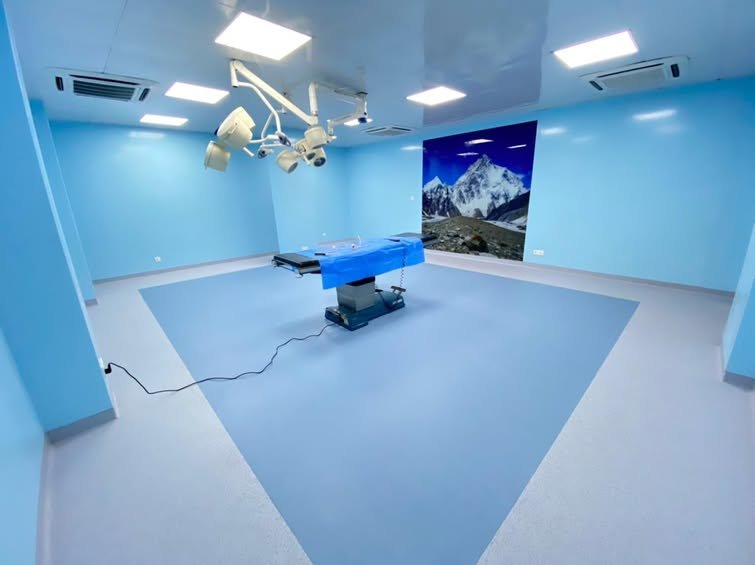

Introduction to ACCO Construction
ACCO Construction is a Lahore-based design & construction firm that specializes in healthcare facilities, commercial buildings, and high-quality residential projects across Pakistan. With years of experience delivering hospital layouts, modular wards, operation theatres, and turnkey healthcare facilities, ACCO combines local knowledge (NBCP & PHC guidelines) with international best practices to create functional, safe, and visually calming medical environments. Our expertise makes us well-suited to plan efficient hospital spaces that help improve patient outcomes and operational efficiency.
Why Efficient Space Planning in Hospitals Pakistan matters
Efficient space planning in hospitals is more than good architecture — it directly impacts patient safety, infection control, staff productivity, operating costs, and the ability to adopt new technologies. In Pakistan, where healthcare demand is rising and hospital budgets vary widely, optimized layouts that balance aesthetics with functionality increase bed turnover, reduce wait times, and make better use of constrained land and budgets. Following local standards like IHRA/PHC guidance and international guidelines ensures compliance and long-term suitability. IHRA+1
What is hospital space planning?
Hospital space planning means arranging clinical and non-clinical functions so they support safe patient care, efficient workflows, regulatory compliance, and a healing environment. It includes:
Program of Requirements (POR): list of departments, bed counts, staffing & equipment needs. HHS.gov
Functional adjacencies (e.g., ER next to imaging).
Circulation design (separate flows for patients, staff, supplies, waste).
Flexibility for future medical technologies and expansion.
Good planning also integrates infection control, accessibility, and patient experience.
H2 — Key Elements of Efficient Space Planning
H3 — 1. Clear functional zoning
Divide the hospital into public, clinical, and service zones:
Public zone: reception, outpatient clinics, waiting areas.
Clinical zone: ER, imaging, OT, ICU, wards.
Service zone: sterilization, laundry, HVAC plant, stores.
Zoning reduces cross-traffic and infection risk and improves wayfinding. International and local guidelines emphasize clear zoning for safety and infection control. healthfacilityguidelines.com+1
H3 — 2. Efficient circulation & adjacency planning
Design corridors, lifts and access so that:
Emergency routes are direct to imaging and OT.
Clean and dirty flows are fully separated.
Supply and waste routes do not cross patient circulation.
Well-planned adjacencies reduce transfer times and staff movement, saving operating costs.
H3 — 3. Right sizing rooms & modular layouts
Use standard room sizes (e.g., bed bay, consulting room, minor OT templates) to speed design and construction. Modular design allows:
Faster construction (prefab/PEB elements).
Future reconfiguration (convert wards to isolation or step-down units).
Cost predictability.
International guidance and modern facility standards recommend standard “room modules” to improve efficiency. Facility Guidelines Institute+1
H3 — 4. Infection control through design
Space planning must support infection prevention:
Single rooms or negative-pressure isolation for contagious cases.
Dedicated donning/doffing areas for high-risk zones.
Easy-to-clean surfaces and accessible hand hygiene stations.
This is especially important in Pakistan’s context where bed occupancy and infectious disease outbreaks require flexible isolation capacity. medica-tradefair.com
H3 — 5. Flexibility & future-proofing
Healthcare evolves rapidly. Plan spaces that can be adapted:
Removable partitions, plug-and-play utilities, and service corridors.
Shell spaces for future equipment (e.g., larger imaging machines).
Provisions for telemedicine, IT rooms, and data infrastructure.
International and regional guidelines emphasize long-term adaptability in facility planning. healthfacilityguidelines.com+1
H3 — 6. Healing aesthetics & patient experience
Aesthetics aren’t optional — they promote recovery:
Natural light, views of greenery, and calming color palettes.
Acoustic control in wards and waiting areas.
Comfortable waiting and family spaces.
Design that balances form with function improves patient satisfaction scores and reduces stress for staff and visitors.
H2 — Practical Methods & Approaches
H3 — Evidence-based design (EBD)
Use research and data to inform layouts — e.g., single rooms lower infection rates; decentralized nurses’ stations reduce walking distances. Refer to EBD literature when making layout choices. PMC
H3 — Lean healthcare design
Apply lean principles to eliminate waste (unnecessary movement, duplicated processes) and create efficient workflows:
Map clinical processes.
Measure staff travel distances.
Re-arrange to minimize back-and-forth.
H3 — Simulation & mockups
Use flow simulations and full-scale mockups for critical spaces (OT, ICU). This catches design issues before construction.
H3 — Modular & prefabricated construction
Prefabrication (including PEB shells and modular ward pods) speeds delivery and improves quality control. ACCO’s engineering background makes modular solutions practical for many Pakistani projects.
H2 — Facts, Figures & Local Trends (Pakistan)
Bed to population gap: Many regions in Pakistan still have limited bed capacity, forcing compact and multi-use layouts. (See local healthcare infrastructure analyses.) pakhealthcare.pk
Guidelines & standards: IHRA and provincial PHC guidelines outline design and functional standards for hospital spaces which designers must follow. IHRA+1
International benchmarks: Use FGI and International Health Facility Guidelines to benchmark area standards per bed and room specifications. Facility Guidelines Institute+1
Design inspiration: Global case studies (ArchDaily) show how waiting areas, courtyards, and natural ventilation can be used to combine aesthetics with function. ArchDaily+1
H2 — Comparison Table: Traditional vs Efficient Space Planning
| Aspect | Traditional Layout | Efficient, Modern Layout |
|---|---|---|
| Ward type | Open wards (multi-bed) | Mix of single & multi-bed; isolation-ready |
| Circulation | Shared flows | Separate patient/staff/supplies flows |
| Flexibility | Limited | Modular rooms, shell spaces |
| Infection control | Reactive | Built-in (isolation rooms, buffers) |
| Staff efficiency | High walking distances | Decentralized stations, optimized adjacencies |
| Construction speed | Conventional | Modular/PEB options increase speed |
H2 — Pros & Cons
✅ Benefits of Efficient Space Planning
Improves patient safety and infection control. medica-tradefair.com
Increases staff productivity and reduces operating costs.
Enhances patient satisfaction and healing environment.
Allows quicker adaptability to surges (e.g., outbreaks).
Supports modern technology and telemedicine.
⚠️ Potential Disadvantages / Challenges
Higher upfront design cost for simulations and mockups.
Initial capital for modular or single-room emphasis can be higher.
Requires stakeholder engagement (clinicians, admin) — time-consuming.
Must comply with multiple regulatory frameworks (IHRA, PHC, NBCP) which can complicate design. IHRA+1
H2 — Implementation Checklist for Hospital Owners (Quick Guide)
Prepare a detailed Program of Requirements (POR). HHS.gov
Define bed mix (single vs multi) and surge capacity.
Map clinical workflows and critical adjacencies.
Separate routes: patients, staff, supplies, waste.
Allocate shell spaces & modular zones for future upgradation.
Specify finishes and materials for infection control and maintenance.
Use mockups for high-risk zones (OT, ICU).
Engage with local authorities early for compliance (IHRA/PHC/NBCP). IHRA+1
H2 — Frequently Asked Questions (FAQs)
Q1: What is the typical space required per bed in a modern hospital?
A: Area per bed varies by country and facility type. Use local PHC/IHRA guidance for Pakistan and international benchmarks (FGI / Health Facility Guidelines) to set specific area standards per bed. Facility Guidelines Institute+1
Q2: Should new hospitals prioritize single rooms or multi-bed wards?
A: A mixed approach is recommended: prioritize single/isolatable rooms for infection control and privacy, with some multi-bed wards where cost and demand justify them. Flexibility matters. medica-tradefair.com
Q3: How do we balance aesthetics with strict infection control needs?
A: Choose calming, durable finishes that are easy to clean, maximize natural light, and design spaces (like waiting areas) with proper circulation and distancing. Materials should meet healthcare cleaning standards. medica-tradefair.com
Q4: Are modular hospitals suitable for Pakistan’s healthcare needs?
A: Yes. Modular and prefabricated solutions speed delivery and can be especially effective in remote or surge situations. Ensure modules meet local seismic, fire and NBCP standards. ArchDaily
Q5: How can ACCO help with hospital space planning?
A: ACCO provides POR development, architectural & MEP design, modular construction options, compliance support with IHRA/PHC/NBCP, mockups, and turnkey delivery — from concept to commissioning. (Contact details in CTA below.)
H2 — Local Case Studies & Inspirations
Small hospital layouts tailored for Pakistan’s towns: compact zoning, combined ER/OPD shells for expansion. Architecture and Construction Company
International examples show how courtyards and daylight improve patient recovery — adapt these ideas to local climate and cultural context. ArchDaily
(For visual inspiration, visit ArchDaily’s hospital category and our ACCO hospital project pages.) ArchDaily+1
H2 — SEO & Content Elements (Images & Alt Text Suggestions)
Include images to improve time on page and SERP performance:
Image: 100-bed hospital floor plan (alt text: “100 bed hospital floor plan optimized for efficient circulation and infection control”). Architecture and Construction Company
Image: Waiting area with natural light (alt text: “Healing hospital waiting area with natural light and landscaped courtyard”). ArchDaily
Image: Modular ward pod (alt text: “Modular hospital ward pod for rapid deployment and flexibility”).
Make sure image file names include the target keyword, e.g., efficient-space-planning-hospital-pakistan-floorplan.jpg.
H2 — Internal & External Links
Internal links (examples to include on your site):
House Construction in DHA Lahore —
/house-construction-dha-lahoreCommercial Plaza Builders Lahore —
/commercial-plaza-builders-lahoreACCO Hospital Project: 100 Bed Layout —
/100-bed-hospital-design
High-authority external references (for trust & citation):
IHRA (Pakistan standards PDF). IHRA
Punjab PHC Guidelines. health.punjab.gov.pk
International Health Facility Guidelines / FGI. healthfacilityguidelines.com+1
ArchDaily (hospital design examples). ArchDaily+1
DAWN (contextual article on capacity needs). Dawn
H2 — Final Verdict / Conclusion
Efficient space planning is a strategic investment: it improves clinical outcomes, maximizes operational efficiency, and enhances patient experience. For Pakistan’s healthcare landscape — where demand is rising and budgets are constrained — smart planning that mixes modular construction, evidence-based design, infection control measures, and attractive healing environments is essential.
If you’re building new healthcare facilities, renovating an existing hospital, or need a feasibility plan to convert a block into a clinic or modular ward, prioritize a detailed Program of Requirements, mockups for critical rooms, and compliance checks with IHRA/PHC/NBCP standards. ACCO Construction can guide you through every step — from POR and regulatory approvals to turnkey construction and commissioning.
Call to Action (CTA)
Contact ACCO today for a free consultation!
Phone / WhatsApp: +92 322 8000190
Email: info@acco.com.pk
Website: www.acco.com.pk › Hospital Projects

The Future of Healthcare Infrastructure: What to Expect After 2026
Introduction Hospital Construction in Pakistan has become increasingly critical due to the rising population, urbanization, and growing demand for quality healthcare facilities. Modern hospitals are

From OPD to ICU: Inside a Fully Functional Hospital (2026 Guide)
Modern hospitals are complex healthcare environments where architecture, engineering, and medical technology work together to save lives. From the Outpatient Department (OPD) to the Intensive

Healthcare Compliance & Safety Standards You Must Know in 2026
Introduction to Healthcare Compliance & Safety Standards In 2026, Healthcare Compliance & Safety Standards are becoming increasingly important for hospitals, diagnostic centers, and medical facilities

Modern Healthcare Facility Design in Pakistan – Complete Guide 2026
Modern Healthcare Facility Design in Pakistan – Improving Patient Experience in 2026 Healthcare infrastructure plays a critical role in improving patient outcomes, operational efficiency, and

Complete Healthcare Ecosystem Explained: Facilities, Departments & Services in Pakistan
Pakistan’s healthcare sector is rapidly evolving. Understanding the Complete Healthcare Ecosystem is essential for investors, hospital owners, doctors, and healthcare planners. At ACCO Construction, we

Private Healthcare Projects Pakistan: Opportunities & Challenges in 2026
Private Healthcare Projects: Opportunities & Challenges in 2026 Introduction to ACCO Construction ACCO Construction is one of Pakistan’s leading design-build and construction management companies, delivering

Hospital Construction Cost Per Bed in Pakistan (2026 Guide)
🏗️ Introduction to ACCO Construction When it comes to hospital construction in Pakistan, experience, technical expertise, and regulatory knowledge matter the most. ACCO Construction is

Is Investing in Hospitals & Clinics Profitable in 2026? | ACCO Construction
Introduction to ACCO Construction ACCO Construction is a premier construction and engineering firm based in Lahore, Pakistan, specializing in residential, commercial, and healthcare infrastructure. With

Healthcare Facility Development in Pakistan 2026: Cost, Planning & ROI
Introduction to ACCO Construction ACCO Construction is one of Pakistan’s leading construction and design-build companies, headquartered in Lahore. With years of experience in healthcare construction,

Digital & Smart Healthcare Departments: The Future of Hospitals in 2026
Digital & Smart Healthcare Departments: The Future of Hospitals in 2026 The healthcare industry is rapidly transforming worldwide, and Digital & Smart Healthcare Departments are

Women & Child Healthcare Departments Explained (2026 Guide)
Women & Child Healthcare Departments Explained (2026 Guide) Women & Child Healthcare Departments are among the most critical components of modern hospital infrastructure in Pakistan.

Diagnostic & Imaging Departments: Layout, Equipment & Trends (2026) | ACCO Construction
Diagnostic & Imaging Departments: Layout, Equipment & Trends (2026) The Diagnostic & Imaging Departments: Layout, Equipment & Trends (2026) are becoming the backbone of modern

Critical Care Units Explained: ICU, CCU, NICU & HDU in 2026 | ACCO Construction
Critical Care Units Explained: ICU, CCU, NICU & HDU in 2026 In 2026, Critical Care Units (ICU, CCU, NICU & HDU) are becoming the backbone

Healthcare Construction in Pakistan: From Concept to Completion in 2026

Hospital HVAC, Medical Gas & Safety Systems Explained (2026)
Hospital HVAC, Medical Gas & Safety Systems Explained (2026) Healthcare infrastructure in Pakistan is rapidly evolving. With new tertiary care hospitals, private medical centers, and

Smart Hospital Design Trends to Watch in 2026 – Complete Guide by ACCO Construction
Introduction – ACCO Construction ACCO Construction is one of Pakistan’s leading construction and healthcare infrastructure development companies, specializing in hospital design, medical facility planning, turnkey

Healthcare Facility Design Standards 2026: Hospitals, Clinics & Labs in Pakistan
Introduction to ACCO Construction ACCO Construction is a leading construction, design & build company in Pakistan, with a strong footprint in Lahore, DHA, and major

Expanding a Clinic into a Medical Center: Step-by-Step Guide (2026)
Introduction to ACCO Construction ACCO Construction is a trusted and experienced construction company based in Lahore, Pakistan, specializing in healthcare construction, hospital design, commercial buildings,

Primary Healthcare Clinics: Design & Services for 2026 – A Complete Guide by ACCO
Introduction to ACCO – Healthcare Planning & Construction Experts ACCO is a professional construction, planning, and healthcare infrastructure company based in Lahore, Pakistan, delivering high-quality

Clinic Setup Guide 2026: Departments, Space & Equipment – Complete Planning by ACCO
Introduction to ACCO – Healthcare Planning Experts in Pakistan ACCO is a leading construction, planning, and healthcare infrastructure development company based in Lahore, Pakistan, delivering

How to Plan a Modern Medical Center in 2026 – Complete Guide for Pakistan
Introduction to ACCO – Healthcare Planning & Construction Experts ACCO is a trusted construction, planning, and design company based in Lahore, Pakistan, with extensive experience

Medical Center vs Hospital vs Clinic: Key Differences Explained (2026)
Introduction to ACCO – Healthcare Construction Experts ACCO is a leading construction, planning, and design company in Pakistan, specializing in healthcare infrastructure, including hospitals, medical

Modern Hospital Design in Larkana – Construction Trends 2026
By ACCO – Experts in Healthcare Planning & Hospital Construction Introduction Healthcare infrastructure is evolving rapidly in Pakistan, and cities like Larkana are witnessing a

Hospital Planning & Departmental Zoning: Best Practices for 2026
By ACCO – Experts in Modern Hospital Planning, Design & Construction Introduction Healthcare infrastructure is evolving rapidly. By 2026, hospitals are no longer just treatment

2026 Hospital Projects in Mardan: Modern Design & Construction Ideas
Introduction to ACCO Construction ACCO Construction is one of Pakistan’s emerging and reliable construction companies, known for delivering healthcare, residential, commercial, and institutional projects with