




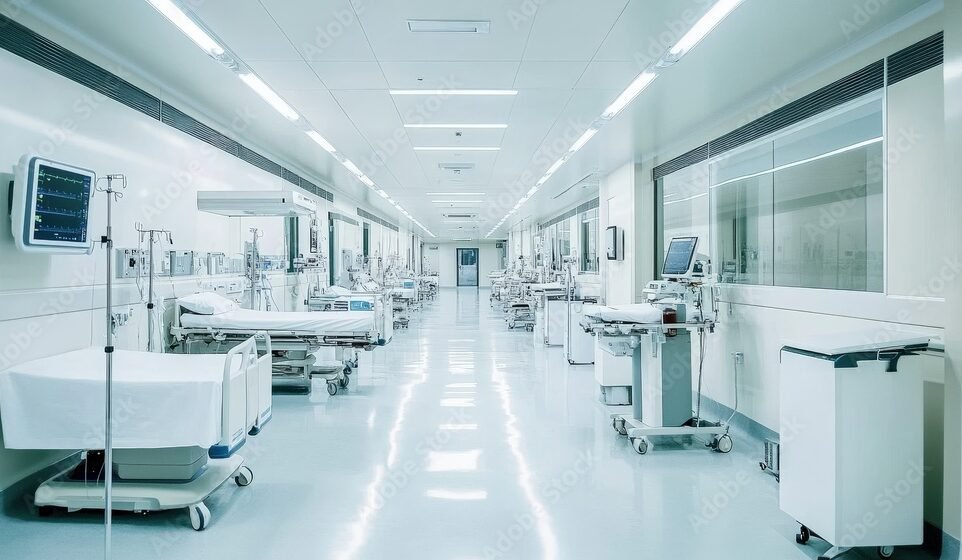
Modern hospitals are complex healthcare environments where architecture, engineering, and medical technology work together to save lives. From the Outpatient Department (OPD) to the Intensive Care Unit (ICU), every section of a hospital must be carefully designed to ensure efficiency, hygiene, safety, and patient comfort.
In this detailed guide, ACCO Construction explains how a fully functional hospital operates, the standards followed in Pakistan, and the latest construction trends to help developers, investors, and healthcare planners understand what goes into creating a modern medical facility.
🏢 Introduction to ACCO Construction
Ahmed Construction Company (ACCO) is a leading construction and engineering firm based in Lahore, Pakistan, specializing in hospital construction, industrial buildings, and commercial infrastructure. With decades of experience, ACCO provides end-to-end Design & Build solutions, including:
ACCO Construction is committed to delivering hospitals that meet international standards, integrating modern technology, patient-centered design, and energy-efficient systems.
🏥 Understanding a Fully Functional Hospital
A hospital is much more than just a building; it’s a highly organized system designed to deliver healthcare services efficiently. Every department serves a unique purpose while maintaining smooth communication with other areas.
A fully functional hospital typically includes:
Reception & Patient Registration
Outpatient Department (OPD)
Emergency Department
Diagnostic Facilities
Operation Theatres (OT Solutions)
Inpatient Wards
Intensive Care Units (ICU)
Pharmacy
Administration & Support Areas
Each department’s design impacts workflow, patient safety, and overall hospital efficiency. For example, locating diagnostic facilities near OPD and emergency departments reduces delays and improves treatment times.
📋 Hospital Department Breakdown (OPD to ICU)
1️⃣ Outpatient Department (OPD)
The OPD is usually the first point of contact for patients. It handles those who do not require hospital admission. A well-designed OPD ensures smooth patient flow, minimal waiting times, and comfortable consultation areas.
Key components of an OPD include:
Registration counters and kiosks
Waiting lounges with seating arrangements based on patient volume
Consultation rooms for doctors and specialists
Minor treatment rooms for procedures like wound dressing or injections
Medical record offices for patient documentation
Design considerations:
Floor size: Depending on hospital capacity, OPDs can range from 500 sq ft (small clinics) to 2,500 sq ft (large hospitals).
Patient flow: Separate entrances for OPD and emergency patients reduce congestion.
Staffing: Dedicated receptionists, nurses, and support staff improve operational efficiency.
Professional firms offering Architectural & Planning services can optimize layouts for space, accessibility, and compliance with healthcare standards.
2️⃣ Emergency Department
Emergency departments operate 24/7 and are crucial for handling critical cases like accidents, heart attacks, or trauma. Quick access and workflow efficiency can literally save lives.
Important areas within the emergency department:
Triage area for rapid assessment
Emergency treatment rooms equipped with life-saving tools
Trauma units for high-risk injuries
Ambulance entry and drop-off zones
Design tips:
Close proximity to diagnostic facilities reduces treatment delays.
Wide corridors for patient transport and emergency equipment.
Integration with ICU for critical cases ensures seamless patient transfer.
3️⃣ Diagnostic Facilities
Diagnostics are essential for accurate treatment planning. Modern hospitals require quick and reliable testing options.
Common diagnostic departments:
Radiology: X-Ray, CT Scan, MRI
Pathology laboratories
Ultrasound units
Cardiology testing rooms
Equipment planning is crucial. Equipment Planning services ensure machines are strategically placed, staff workflow is optimized, and patient wait times are minimized.
4️⃣ Operation Theatres (OT)
Operation theatres are sterile environments where surgical procedures are performed. They require strict adherence to hygiene standards and careful equipment planning.
Modern OT requirements:
Laminar airflow and HEPA filtration systems
Sterile zones and scrub areas
Medical gas pipelines
Surgical lighting and advanced monitoring equipment
Firms providing OT Solutions ensure compliance with international surgical standards, including workflow for anesthesiologists, surgeons, and nurses.
5️⃣ Inpatient Wards
Inpatient wards accommodate patients who require observation or recovery after procedures.
Ward types:
General wards with multiple beds
Semi-private rooms
Private rooms for individual patients
Isolation rooms for infectious cases
Design considerations:
Proper ventilation and natural light
Easy access to nursing stations
Sufficient storage for medical supplies
6️⃣ Intensive Care Unit (ICU)
The ICU is one of the most critical departments, designed for life-support treatment for severely ill patients.
ICU features:
Continuous patient monitoring systems
Ventilators and advanced life-support equipment
Central nursing stations for efficient supervision
Medical gas and suction systems
Design tip: Proximity to emergency and operation theatres ensures rapid intervention.
🏗 Hospital Construction Methods
Grey Structure Construction
Basic building skeleton (columns, beams, walls, floors)
Cost-effective but requires separate contracts for finishing, MEP, and interiors
Turnkey Hospital Construction
Complete solution including design, structure, MEP, interiors, and equipment
Faster timelines and better integration of hospital systems
Prefabricated Hospitals
Modular and prefabricated components reduce construction time
Ideal for remote or disaster-prone areas
MEP integration is vital for HVAC, electricity, water supply, and medical gases. MEP Services ensure safety and efficiency in hospital operations.
📈 Hospital Planning Standards in Pakistan
Hospital infrastructure must follow strict regulations and guidelines.
Regulatory authorities include:
Standards cover:
Patient safety
Infection control
Fire safety and evacuation routes
Electrical and MEP compliance
📊 Healthcare Construction Trends in Pakistan (2026)
The healthcare sector is growing due to population growth, rising medical demand, and government initiatives.
Key trends:
Prefabricated hospitals for rapid deployment (Renovation & Upgradation)
Smart hospitals with IoT integration
Energy-efficient buildings with solar and HVAC systems
Advanced medical equipment integration (Equipment Planning)
Emphasis on patient-centered designs with natural light and green spaces
📊 Pros and Cons of Modern Hospital Infrastructure
✅ Advantages
Improved patient outcomes and safety
Efficient staff workflow
Access to advanced diagnostic and treatment technology
Faster emergency response and reduced mortality
Enhanced patient experience
❌ Disadvantages
High construction costs
Maintenance and operational complexity
Need for specialized staff training
Regulatory compliance challenges
Equipment procurement and installation costs
❓ Frequently Asked Questions (FAQs)
1. What departments are essential in a hospital?
All major areas including OPD, emergency, diagnostics, OT, wards, and ICU are critical.
2. How much does hospital construction cost in Pakistan?
Costs vary: Grey structure ~PKR 3,500–4,500 per sq ft; Turnkey hospitals may reach ~PKR 7,000–10,000 per sq ft depending on technology and scale.
3. How long does it take to build a hospital?
Small hospitals: 12–18 months
Large hospitals: 2–3 years (turnkey solutions are faster)
4. Who designs hospitals in Pakistan?
Professional firms like ACCO Construction and Architectural & Planning provide complete hospital design and construction services.
5. What is an OT and ICU setup requirement?
Sterile environment, laminar airflow, medical gas pipelines, monitoring systems, and workflow planning for staff.
6. Can hospitals use prefabricated construction?
Yes, especially for remote areas or disaster-prone regions; reduces time and cost.
7. What standards must Pakistani hospitals follow?
They follow Punjab Healthcare Commission regulations, WHO recommendations, and international architectural standards.
🔎 Internal Resources
🏁 Final Verdict
Hospitals are complex buildings requiring careful planning, design, and execution. Each department from OPD to ICU must function seamlessly to deliver safe, efficient, and high-quality patient care.
With rising demand for healthcare in Pakistan, investing in modern hospitals is crucial. ACCO Construction and specialized partners provide turnkey solutions to deliver high-quality, regulatory-compliant medical facilities.
📞 Contact ACCO Construction
Planning to build a hospital or healthcare facility?
Contact ACCO Construction today for a free consultation.
📞 Phone / WhatsApp: 0322-8000190
🌐 Website: www.acco.com.pk